About Top and Bottom Orientation (Tenchi)

Printing Basics
Orientation
In printing,「Tenchi」refers to the top (Ten) and bottom (Chi) of the page.
It is a fundamental layout concept that determines the correct orientation of design data and greatly affects the final printed quality.
If Tenchi is set incorrectly, especially for printed items with a fixed reading direction such as business cards, flyers, brochures, booklets, or posters, it may result in unintended outcomes such as upside-down text, reversed photographs, or inverted layouts.
Our Standard for Tenchi
If your submitted data does not include a Tenchi specification, we will determine the top and bottom based on our internal standards.
If you require a specific Tenchi orientation, please indicate it clearly outside the trim marks.
※ Note: For vertical text layouts, the top and bottom positions are reversed.
Tenchi for Designs That Open Upward or Downward (such as fold-over point cards)
For the front side, please create the design so that the cover portion is positioned at the top (Ten) once flipped.
For the back side (inside),no special adjustment is required.
If the design requires the back cover to be positioned at the top (Ten),please invert the entire inside (back) layout vertically.
For Rhombus-Shaped Designs
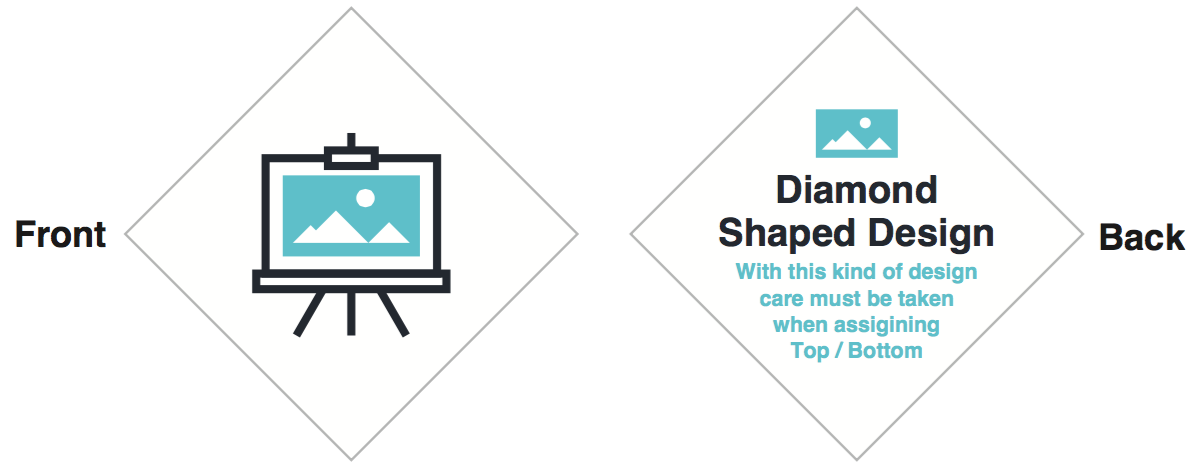
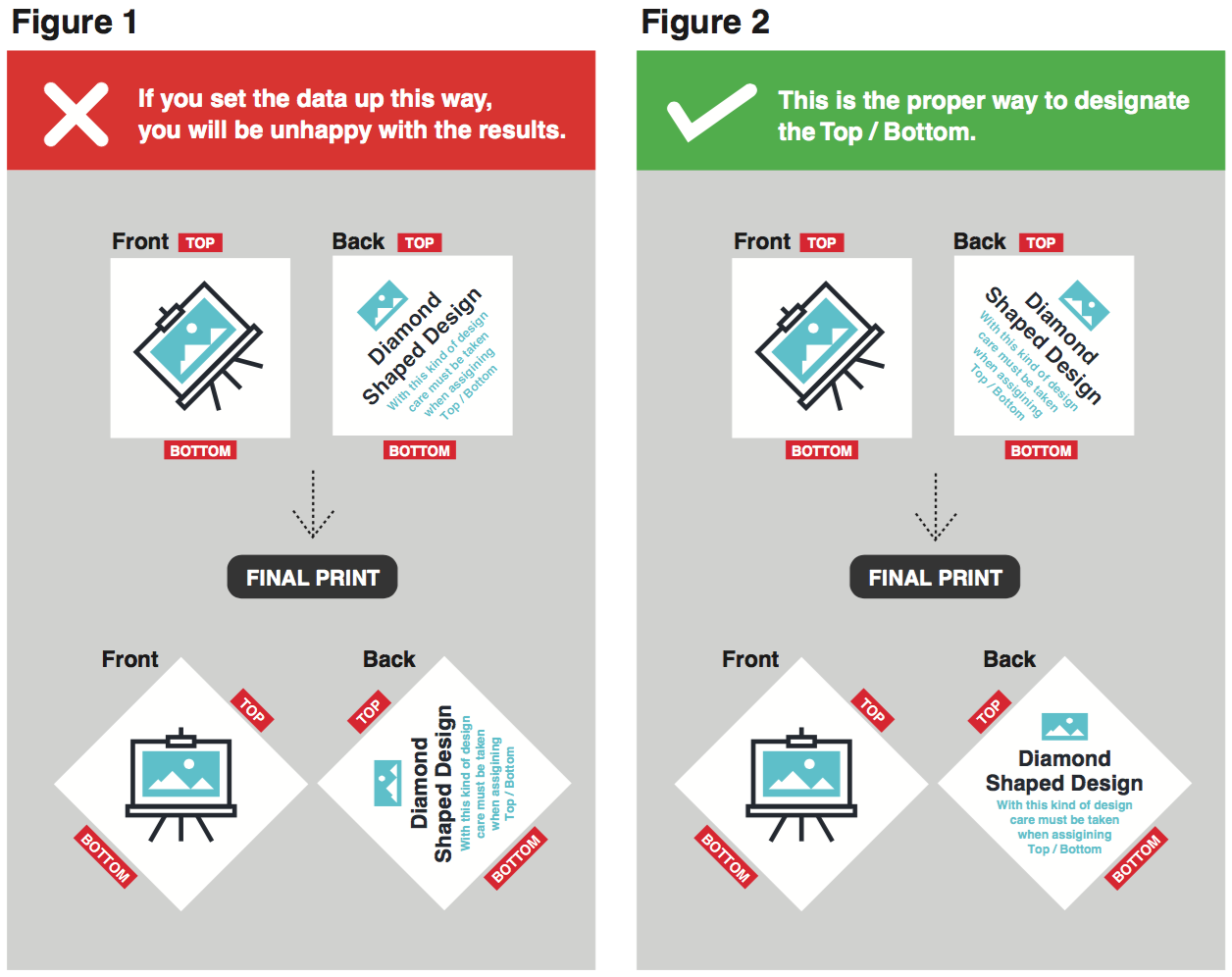
When using a rhombus shape in the design, please take extra care with Tenchi orientation. If created using the Tenchi orientation shown in Figure 1, the front and back sides will not align correctly when printed.
Figure 2 shows the correct way to specify Tenchi for this type of design. Please note that this is not part of our data check process, so double-check carefully before submitting.
Why Tenchi Is Important
-
To easily determine the intended orientation
Correct Tenchi specification allows our production and inspection processes to proceed smoothly and prevents mis-orientation in the final product.
-
To maintain accuracy during trimming
If Tenchi is unclear, the trimming reference may be misinterpreted, which can disrupt the visual balance of the design.
-
To ensure consistency between front and back sides
For double-sided printing, if one side is reversed, it may cause misalignment and reduced readability.
Requests When Preparing Your Data
When preparing your data, please check the following points:
- The design’s top direction matches the intended Tenchi orientation
- Images and logos are placed in the correct orientation
- The layout follows the template for the final size
- For booklets, Tenchi is consistent across the cover and all inner pages


 Japan
Japan